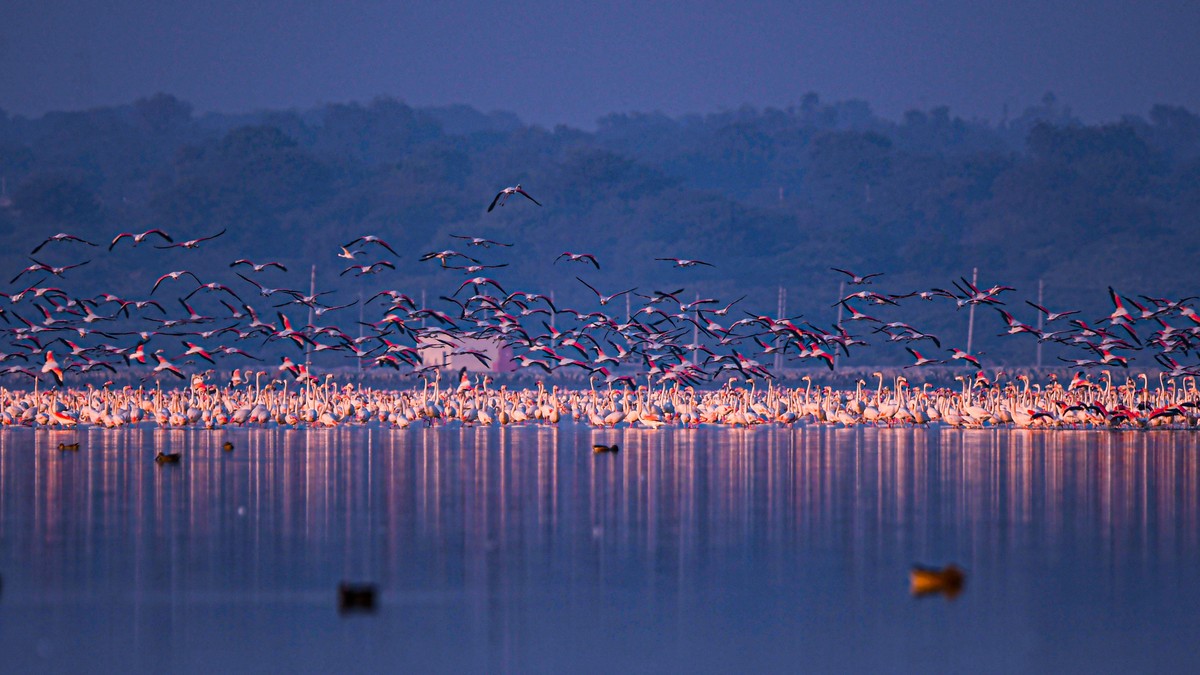
If you already did Lake Nakuru on a first trip and left wondering where the flamingos went, here is the honest answer. This Lake Bogoria hot springs flamingos guide explains where they went and why. Most of them moved to Lake Bogoria. Rising water levels diluted Nakuru’s alkalinity over the past decade, and that thinned out the blue-green algae, called spirulina, that lesser flamingos feed on. Bogoria kept its strong alkaline chemistry, so the birds followed the food.
That shift is not a rumor from a tour brochure. It is a documented change in water chemistry that most travel blogs still gloss over, and it means Lake Bogoria, about 260 km north of Nairobi in Baringo County, is now one of the more reliable flamingo spots in Kenya’s Rift Valley. Add steaming hot springs, geysers, and a good chance of greater kudu, and you have a strong case for a repeat visitor ready to move past the Mara and Nakuru into Samburu and Laikipia territory.
Lake Bogoria Hot Springs Flamingos Overview
Lake Bogoria National Reserve sits in a narrow, dramatic rift valley trough near the town of Marigat. The lake itself is shallow and alkaline, ringed by steep escarpment walls that make it feel more remote than Nakuru, even though it is only about 90 km further north. The reserve covers roughly 107 square km, small enough to explore properly in a day, though most visitors give it two.
The draw is simple. Hot springs bubble along the western shore, flamingos gather by the thousands when conditions are right, and the birding list runs past 300 species. It is a working landscape too. The Endorois community has lived around this lake for generations, and their history is part of the story here.
Loburu Hot Springs and Geysers
The Loburu hot springs, on the lake’s western edge, are the most active geothermal feature. Water surfaces near boiling, with temperatures reported around 98 degrees Celsius at some vents. Several geysers push jets of steam and water up to a few meters into the air, and the ground around them is stained orange and white from mineral deposits.
Guides usually walk visitors along a marked path close enough to feel the heat and smell the sulphur. Do not step off the path or touch the water directly. The heat can cause serious burns, and the ground crust near some vents is thinner than it looks.
Why Flamingos Gather Here
Lesser flamingos need highly alkaline water to grow the spirulina algae that turns their feathers pink. Lake Bogoria’s chemistry, still strongly alkaline after Nakuru’s dilution, supports thick algae blooms in the right season. When conditions align, counts at Bogoria have run into the hundreds of thousands, filling the shoreline with pink and white.
Numbers move around from year to year and even week to week, driven by rainfall, algae blooms, and food availability elsewhere in the Rift Valley lake system, including Lake Natron in Tanzania. No guide can promise an exact count on a given day. What we can say honestly is that Bogoria has been the more consistent bet since the Nakuru shift began.
Best Time to Visit for Flamingo Viewing
The driest months, from July to October and again in January and February, tend to concentrate birds along shorter stretches of shoreline as water levels drop. That makes viewing easier and photos better. Flamingos can still appear outside these windows, and they can also disappear during a dry spell if algae blooms move elsewhere.
If flamingo numbers are the main reason for your trip, build in flexibility. Pair a Bogoria visit with a wider northern itinerary so the trip still delivers even in a quiet flamingo season. Many of our guests find that traveling in Kenya’s low season also means better lodge rates and fewer vehicles at the viewpoints.
Wildlife and Birding Beyond Flamingos
Lake Bogoria is one of the few places in Kenya to reliably spot greater kudu, with their long spiral horns, on the acacia-covered slopes above the lake. Buffalo, klipspringer, and warthog are common, and leopard are present but rarely seen.
The bird list is the bigger draw for many repeat visitors. Over 300 species have been recorded around the lake and its surrounding scrub, including pelicans, African fish eagles, and a wide range of waders along the shore. If you are building out a birding kit for this trip, it is worth reading up on the right binoculars for spotting flamingos and birdlife before you go, since distant shoreline views reward a bit more magnification than forest birding does.
Getting to Lake Bogoria
From Nairobi, the drive covers about 260 km and takes roughly 4 hours, mostly on the tarmac A104 highway through Nakuru town, then north on the B4 toward Marigat. From Nakuru town itself, it is a shorter run, about 90 km and 1.5 to 2 hours, though the final stretch near Marigat can be rough after heavy rain.
| Route | Distance | Typical drive time | Road conditions |
|---|---|---|---|
| Nairobi to Lake Bogoria | 260 km | 4 hours | Tarmac most of the way, good condition |
| Nakuru town to Lake Bogoria | 90 km | 1.5 to 2 hours | Tarmac to Marigat, gravel near reserve gates |
| Lake Bogoria to Lake Baringo | 20 km | 30 to 45 minutes | Mixed tarmac and gravel |
A 4×4 is not strictly required to reach the main gates in dry weather, but reserve tracks along the shoreline and near the hot springs get muddy and rutted fast after rain. We recommend a 4×4 with decent ground clearance for anyone visiting between March and May or in November.
Entry Fees and Park Regulations
Lake Bogoria National Reserve is managed by Baringo County, not Kenya Wildlife Service, so fees differ from parks like Nakuru or Amboseli.
| Category | Indicative fee (non-resident) |
|---|---|
| Adult | around USD 20 to 25 per day |
| Child | around USD 10 to 15 per day |
| Vehicle | separate small entry charge, typically under USD 5 |
Treat these as an indicative range rather than a fixed quote, since county-managed reserves adjust rates periodically without much notice. Check current rates before you travel. Camping and guided walks to the hot springs sometimes carry a small additional fee at the gate.
Where to Stay Near Lake Bogoria
Options here are fewer and simpler than around Nakuru, which suits travelers looking for something quieter. Lake Bogoria Spa Resort sits just outside the reserve gate and draws its own pools from the geothermal water, a nice way to soak after a day of walking. Inside the reserve, Fig Tree Camp and Acacia Camp offer basic public campsites with pit latrines and cold showers, best for travelers with their own gear.
For a bit more comfort within reach of the lake, Papyrus Guesthouse in Marigat and a handful of small lodges around Lake Baringo, 20 km north, work well as a base for exploring both lakes over two or three nights.
What to Pack and Safety Tips
Bring closed shoes with good grip for walking near the geysers, since the ground is uneven and slippery in spots. Sun protection matters more than people expect, since there is little shade along the shoreline. Carry more water than feels necessary. Daytime temperatures in the valley often reach 30 degrees Celsius or higher.
Never approach steam vents or pools without a guide, and keep children close on the geyser walk. The reserve also has a resident hippo and crocodile population in the lake shallows, so stick to marked viewing points rather than wading in for a closer photo.
Cultural Experiences With the Local Community
The Endorois community has lived around Lake Bogoria for generations and holds deep cultural ties to the lake and its hot springs, which feature in traditional practices around health and healing. Some community-run visits and cultural stops can be arranged near Marigat, giving a fuller picture of the region beyond wildlife alone. The neighboring Ilchamus community, based mainly around Lake Baringo, shares this stretch of the Rift Valley and its fishing traditions.
Combining Lake Bogoria With Other Destinations
Lake Bogoria works best as part of a longer loop rather than a standalone day trip from Nairobi. Pair it with Lake Baringo, just 20 km north, for a boat trip and a different set of birds on a freshwater lake. From there, many of our repeat guests combine it with a northern Kenya safari circuit through Samburu, extending the trip into Laikipia’s conservancies for a change of scenery from the Mara and Nakuru.
This kind of extended northern loop suits travelers who have already covered the classic southern circuit and want somewhere less crowded, with a different mix of wildlife and landscape.
The Valley Safaris Difference
We do not sell Lake Bogoria as a guaranteed flamingo spectacle, because nobody can promise wild birds will show up on schedule. What we do promise is honest planning. We check recent sightings before we route a trip through Bogoria, we build in Lake Baringo or Samburu as a strong follow-on so the day still delivers if flamingo numbers are low, and we know which lodges near Marigat are worth the money and which are not.
Our guides have walked the Loburu geysers path more times than we can count, and they know exactly how close is safe. That kind of ground-level knowledge, built from years running trips through this part of the Rift Valley, is what keeps guests coming back to us for their second and third Kenya trip.
Plan Your Lake Bogoria Trip With Us
Ready to add Lake Bogoria’s hot springs and flamingos to your Kenya itinerary? Get in touch with Valley Safaris and we will build a route that fits your dates, your pace, and how far into the northern circuit you want to go.